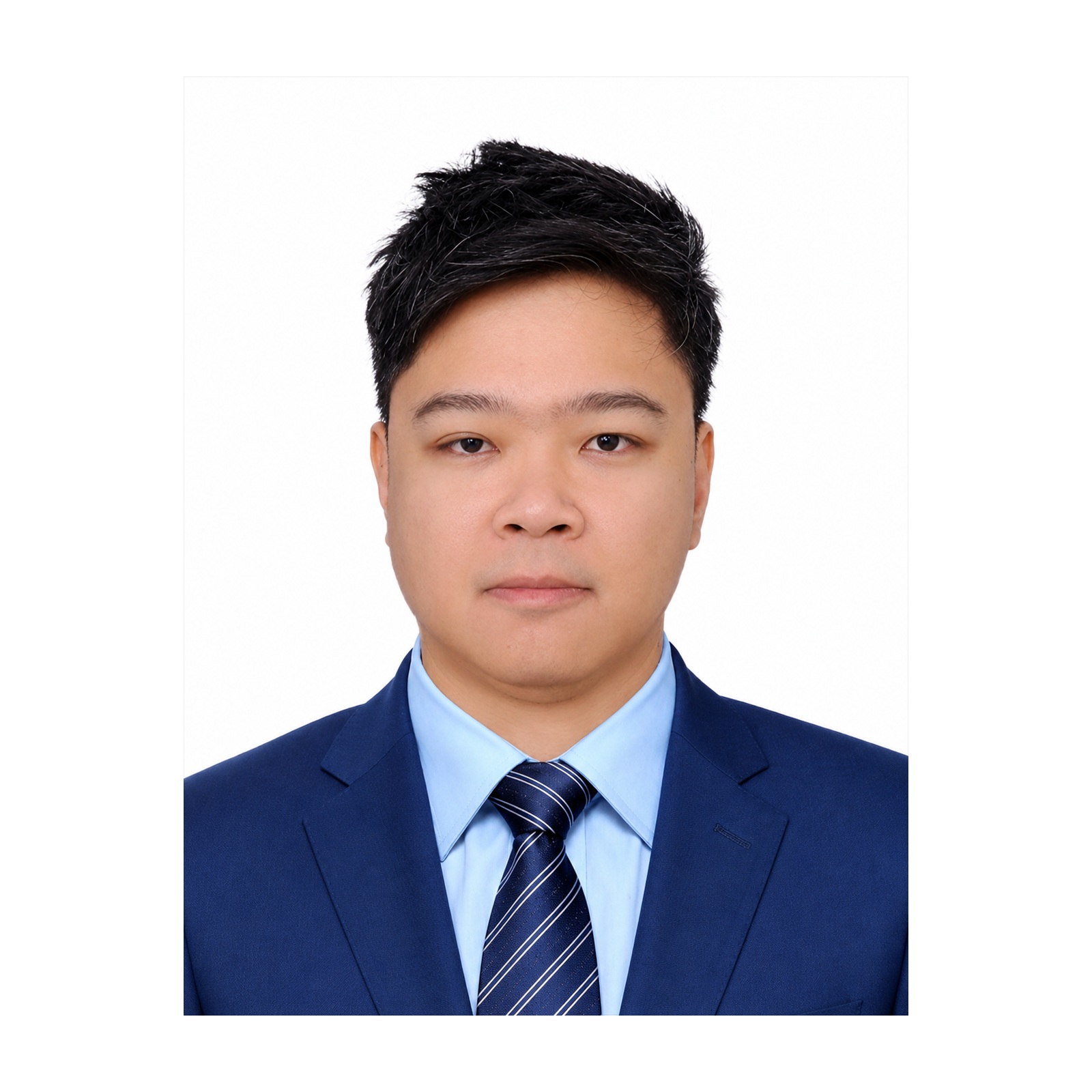
Portrait of Dennis B. Paus
Salalah, Oman

Academic portfolio

Dennis B. Paus

Electronics Engineering Educator

Faculty and laboratory instruction in electronics, embedded systems, and the Internet of Things

Master of Science in Electrical Engineering, with a transcript major in Electronics Engineering. Five years as a lecturer at Far Eastern University Institute of Technology, and electronics teaching at Salalah Vocational College since 2015. Available for lecturer, senior lecturer, and laboratory-instructor appointments in electronics, electrical, and computer engineering.

2015–presentElectronics Engineering Instructor, Salalah Vocational College
2010–2015Lecturer, Far Eastern University Institute of Technology
20+Graduation projects supervised in electronics, embedded systems, and IoT
PRCLicensed Electronics Engineer and Electronics Technician, Philippines

Profile

Prepared for faculty and laboratory appointments in Oman and the wider GCC.

Professional summary

Dennis B. Paus teaches electronics with a student-centred approach covering analogue and digital circuits, communications, embedded systems, and IoT. His academic work includes curriculum development, laboratory instruction, assessment, project supervision, and the use of educational technology.

A Doctor of Philosophy in Computer Engineering at Mapúa University is in progress and has not yet been awarded. The research focus is embedded systems, TinyML, the Internet of Things, and AI-driven electronics.

The current appointment at Salalah Vocational College is a Ministry-supervised vocational post. It comprises teaching and laboratory instruction, and is distinct from a university faculty appointment. Higher-education lecturing experience was gained at Far Eastern University Institute of Technology.

Education

Diploma titles are stated as awarded. The doctoral degree is not yet conferred.

Doctor of Philosophy in Computer Engineering

Mapúa University, Manila, Philippines

Started August 2026; in progress, not yet awarded

Research focus: embedded systems, TinyML, IoT, and AI-driven electronics.

Master of Science in Electrical Engineering

Technological University of the Philippines, Manila

2009–2012

Official diploma title: Master of Science in Electrical Engineering. Major recorded on the transcript: Electronics Engineering.

Bachelor of Science in Electronics and Communications Engineering

Adamson University, Manila, Philippines

2002–2007

Appointments

Higher-education, vocational, and earlier college teaching.

Electronics Engineering Instructor

Salalah Vocational College, Oman

2015–present
  • Delivers diploma-level instruction and assessment on the Diploma in Electronics Instrument Maintenance, including electronics, circuit analysis, and workshop practice.
  • Prepares laboratory experiments, demonstrations, and student materials; sets up and troubleshoots oscilloscopes, signal generators, power supplies, multimeters, and soldering stations.
  • Maintains electronics kits, trainers, consumables, equipment manuals, and a simple inventory record.
  • Supervises graduation projects in electronics, embedded systems, and IoT, numbering more than twenty.
  • Contributes to departmental quality assurance and the Graduation Project Committee, and has modernised delivery through project-based learning and flipped-classroom methods.

Electronics and Communications Engineering Lecturer

Far Eastern University Institute of Technology, Manila

2010–2015
  • Recognised higher-education appointment.
  • Delivered lectures and laboratories in analogue and digital communications and in circuit analysis.
  • Developed teaching materials, learning resources, and student assessments.
  • Supervised final-year thesis projects and contributed to module delivery.

Electronics and Communications Engineering Instructor

AMA Computer College, Cavite

2008–2010

Taught foundational electronics and circuit analysis, with theory integrated into laboratory applications.

Part-time engineering instruction

Lyceum of the Philippines, Cavite; Rogationist College, Cavite

2008; 2010–2013

Engineering Instructor at Lyceum of the Philippines, Cavite (2008). Electronics and Communications Engineering Instructor at Rogationist College, Cavite (2010–2013).

Teaching, laboratory, and scholarship

Selected modules, competencies, projects, and academic contribution.

Courses taught

  • Electronics and circuit analysis: devices, analogue, digital, and troubleshooting
  • Communication engineering: modulation, networking, and cabling
  • Wireless sensor networks
  • Embedded systems and automation: Arduino, ESP32, and IoT applications
  • Computer systems and practical skills: assembly, maintenance, and PCB prototyping
  • Graduation project supervision and assessment

Laboratory competencies

  • Experiment setup, demonstration, student supervision, and workshop housekeeping
  • Oscilloscopes, signal generators, soldering, PCB prototyping, trainers, and embedded kits
  • Maintenance and troubleshooting of teaching equipment and student hardware
  • Inventory of tools and consumables, and laboratory safety briefing
  • Multisim, Eagle, Google Classroom, Webex, and video learning resources

Selected projects

  • Laboratory equipment monitoring with ESP32 and LoRa — supervised graduation project
  • ESP32 home automation with gas sensors and IoT remote control — supervised graduation project
  • Online FM radio with ESP32, Wi-Fi, and a live weather API — instructor-built laboratory demonstration

Paper, publications, and service

  • Paus, D. B. (2012). Air Pollution Monitoring System Utilizing ZigBee Technology. Proceedings of the 1st International Conference on Technology (InCiTE 2012), FEU-East Asia College, Manila.
  • Reviewer, Electronic Systems and Technologies (ISBN 978-971-94108-9-8), an ECE licensure review text.
  • Contributing author, Advanced Mathematics (ISBN 978-971-95440-2-9), an undergraduate engineering mathematics text for ECE students.
  • Graduation Project Committee member, Salalah Vocational College; departmental quality assurance and curriculum alignment.
  • Member, International Association of Engineers (IAENG), Member ID 565700.

Licensure and professional development

  • Licensed Electronics Engineer, Professional Regulation Commission, Philippines, Credential ID 42665
  • Licensed Electronics Technician, Professional Regulation Commission, Philippines, Credential ID 00993
  • Computer Machine Vision with Machine Learning, Edge Impulse / Coursera
  • Introduction to Embedded Machine Learning, Edge Impulse / Coursera
  • Key aspects and governance of Internet of Things, Big Data and Artificial Intelligence, National Institute of Telecommunications (NIT-Poland), Credential ID 21323726
  • AI in practice: building ethical, inclusive, and sustainable futures, CAICT, Credential ID 20538268
  • Smart for all: Beyond Smart Cities, International Telecommunication Union, Credential ID 19978661
  • AI Governance: Fundamentals, International Telecommunication Union, Credential ID 19864751

Research statement

Doctoral studies begun in August 2026 at Mapúa University. The degree has not yet been awarded.

On-node machine learning for wireless sensor networks

Doctoral research addresses on-node machine learning for wireless sensor networks: running TinyML inference on microcontrollers with under 512 KB of SRAM, so that nodes transmit compact alerts rather than raw waveforms and batteries last years rather than days. The application domain is asset integrity: structural health monitoring and industrial predictive maintenance.

Curricula vitae

Download the version aligned with the appointment.

Faculty track

Faculty applicant — Electronics Engineering

For lecturer, senior lecturer, and faculty posts. Emphasises higher-education lecturing at Far Eastern University Institute of Technology, curriculum and assessment, thesis supervision, and academic contribution. The current Salalah appointment is described accurately as vocational instruction.

Download faculty CV (PDF)

Laboratory track

Laboratory instructor — Electrical / Electronics

For laboratory instructor and workshop posts in electrical and electronics engineering. This is the general version: it does not name a particular institution. It emphasises experiment preparation, bench equipment, inventory, laboratory safety, and student project hardware.

Download laboratory CV (PDF)

Both documents are general versions for future applications. Contact details on each curriculum vitae match the details below.

Contact

Enquiries concerning academic appointments are welcome.

How to use this page

Share the site address with a selection panel, or attach the relevant PDF directly to an application. Use the faculty curriculum vitae for teaching appointments and the laboratory curriculum vitae for practical-instruction posts.